
 Share
Share
Spiti Valley
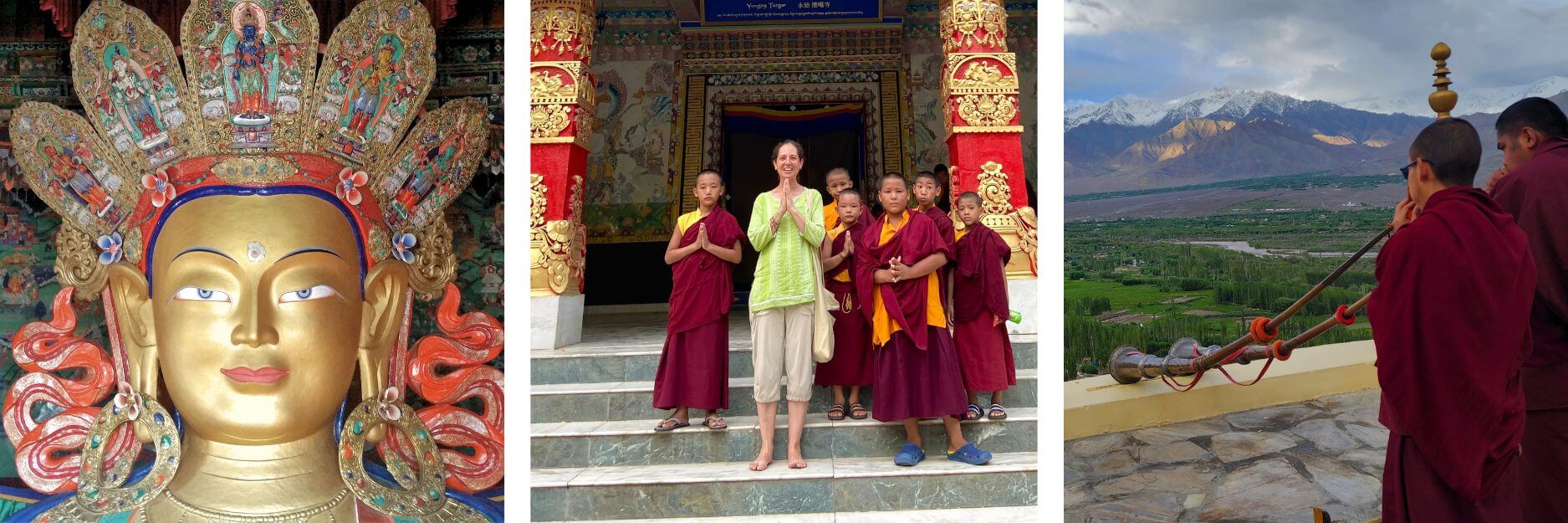
is a beautiful and unique valley located in the northeastern part of the state of Himachal Pradesh, in northern India.”Spiti” is the name used for the valley itself, the river that flows through it, the people who inhabit the region, and the language spoken there.
The valley is a high-altitude desert, situated in a rain shadow. Rain-bearing clouds arriving from the Indian Ocean in the south are blocked by the mighty Great Himalayan Range, which causes most of the rainfall to fall on the southern slopes of the mountains.
This alpine desert is connected to the outside world only during the four summer months. With the arrival of autumn and snowfall in the mountain passes, its Buddhist inhabitants enter a period of isolation and are cut off from the rest of the world for approximately eight months each year. Spiti Valley is home to some of the highest villages in the world, many situated at elevations of 4,200 meters (13,780 ft) and above.
The town of Kaza is the capital of the valley and serves as an excellent base for accommodation while exploring the region.
Getting There and Leaving
- From Kinnaur Valley (Recommended):
Spiti Valley can be reached via a comfortable and gradual drive from Kinnaur Valley, allowing for better acclimatization to the increasing altitude. Since the route passes very close to the border with Tibet, a special travel permit must be obtained in Reckong Peo, the administrative center of Kinnaur. - From Manali:
Spiti can also be reached from Manali, although this option is generally less recommended because of the rapid and less gradual ascent to high altitude. - From Ladakh:
It is also possible to reach Spiti from Ladakh, a journey that typically takes about two days by road. - Continuing to Kinnaur:
Travelers planning to continue from Spiti Valley to Kinnaur Valley must obtain a special permit in Kaza before departure.
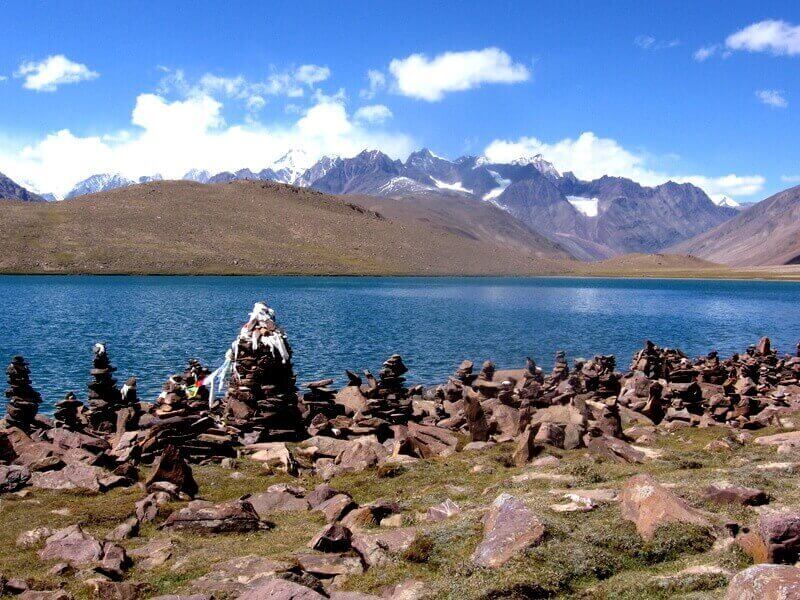
Chandratal Lake (Moon Lake)
A beautiful high-altitude lake in the Himalayas, famous for its crystal-clear waters and spectacular mountain scenery. Located on the route between Spiti Valley and Manali, it can easily be included as a stop while traveling between the two regions.
Monasteries in Spiti Valley
Tabo Monastery
A large monastic complex comprising nine temples, renowned for its remarkably preserved 1,000-year-old wall paintings on mud-plastered walls. It is considered the oldest continuously functioning monastery in India.
Ki Monastery
The largest and most important monastery in Spiti Valley today. Located north of Kaza, it occupies a dramatic hilltop setting overlooking the valley.
Dhankar Gompa
An ancient monastery spectacularly perched on a cliff between Kaza and Tabo Monastery. Its dramatic location and historical significance make it one of the most impressive religious sites in the region.
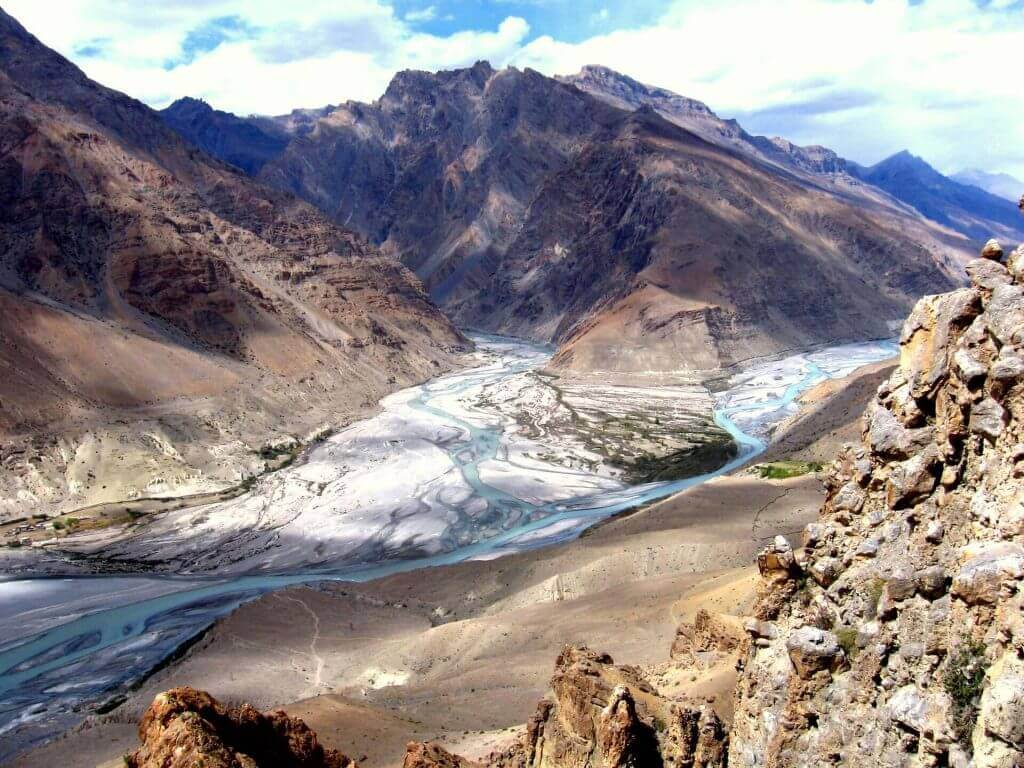
Confluence of the Spiti and Pin Rivers
The meeting point of the Spiti River and the Pin River is one of the most scenic spots in the region. Surrounded by dramatic mountains and barren high-altitude landscapes, the confluence offers beautiful views and serves as the gateway to Pin Valley.
Kinnaur
Kinnaur is a scenic district in northern India, stretching along the Sutlej River. Famous for its apple orchards, the region is known for its welcoming people, who blend Hindu and Buddhist traditions. The distinctive green woolen cap worn by locals is a symbol of Kinnauri identity.
Kinnaur is also home to the sacred Kinnaur Kailash (6,050 m), believed to be the winter abode of the Hindu god Shiva.
The best times to visit Kinnaur and neighboring Spiti Valley are June, when the mountains are still snow-covered, and September, when the monsoon has passed, leaving clear skies and excellent mountain views.
Kalpa
A charming former capital of Kinnaur, located near Reckong Peo. Kalpa offers spectacular views of Kinnaur Kailash and is especially attractive for its traditional old village.
Sarahan
A picturesque mountain village known for panoramic views of Shrikhand Mahadev Peak (5,227 m). It is also home to the historic Bhimakali Temple, a remarkable wooden temple combining Hindu and Buddhist architectural styles.
Sangla Valley
One of the most beautiful valleys in the Himalayas, covered with forests and crossed by the Baspa River. The valley is dotted with charming villages, including Chitkul, the last inhabited village near the India–Tibet border.
Nako
A small Buddhist village at 3,660 meters, centered around a peaceful lake. Located near the border between Kinnaur and Spiti, Nako has the arid landscape and cultural atmosphere more commonly associated with Spiti Valley.